Moosalp (Col de Moos)
John’s Moosalp (Col de Moos) Height Climbing height - length
2048m 1489m - 24.2 km (Turtmann); 1396m - 17.7 km (Visp)
1396m - 20 km (Visp via Zeneggen); 1180m - 14.6 km (Stalden)
Difficulty Beauty
4 (5) 3 (5)
How to get there It is a long way from down the Valais (Wallis) valley in Switzerland from Turtmann (628m) via Unterbäch (1221m) and Bürchen (1283m) to the pass. One could also climb directly up from Visp (652m) via Bürchen on a more consistently steep climb. Through Bürchen it is really steep for some time with up to 16-17%, but then it becomes a little easier again up in the woods. There is also an alternative road to climb from Visp via Zeneggen (1367m), where you pass by another small pass (Loch (1523m)). The eastern side from Stalden (868m) is more evenly steep, with serpentines all the way up. The road is not marked as fully paved on some maps, but most roads up in the mountainsides in Wallis that look unpaved in (for example) Michelin’s maps are in fact mostly tarmacced these days. It is a good, but narrow road.
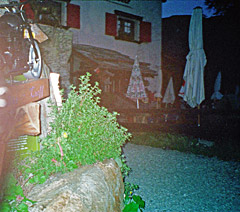
Other comments It is arguably nicer on the east side of the pass. The west side is more like farmland lower down and the forest area higher up seems like a recreational area (partly). There is a restaurant at the top. This pass has no official “pass” designation and I am not sure the locals refer to it as a “pass”, but it surely is a real pass. (Not all passes in Switzerland are called so, like Champex near Martigny.) The pass was referred to as the ‘Col de Moos’ by the owners of the restaurant at the top (which is a bit odd as they speak German on both sides here). The pass road was completed first in 1978. I found the obvious and rather boring looking hotel in Stalden (at the roundabout where you could go to either Zermatt, Saas-Fee or down to Visp) to be a very good choice to spend the night and great value for the money. There were a nicer looking hotel up around Törbel (surely with better views) on the east side. (Bad photo here taken all to late when I arrived around 9 pm.) Gerd Balser has the best description I have found on the Moosalp (in German).
Map